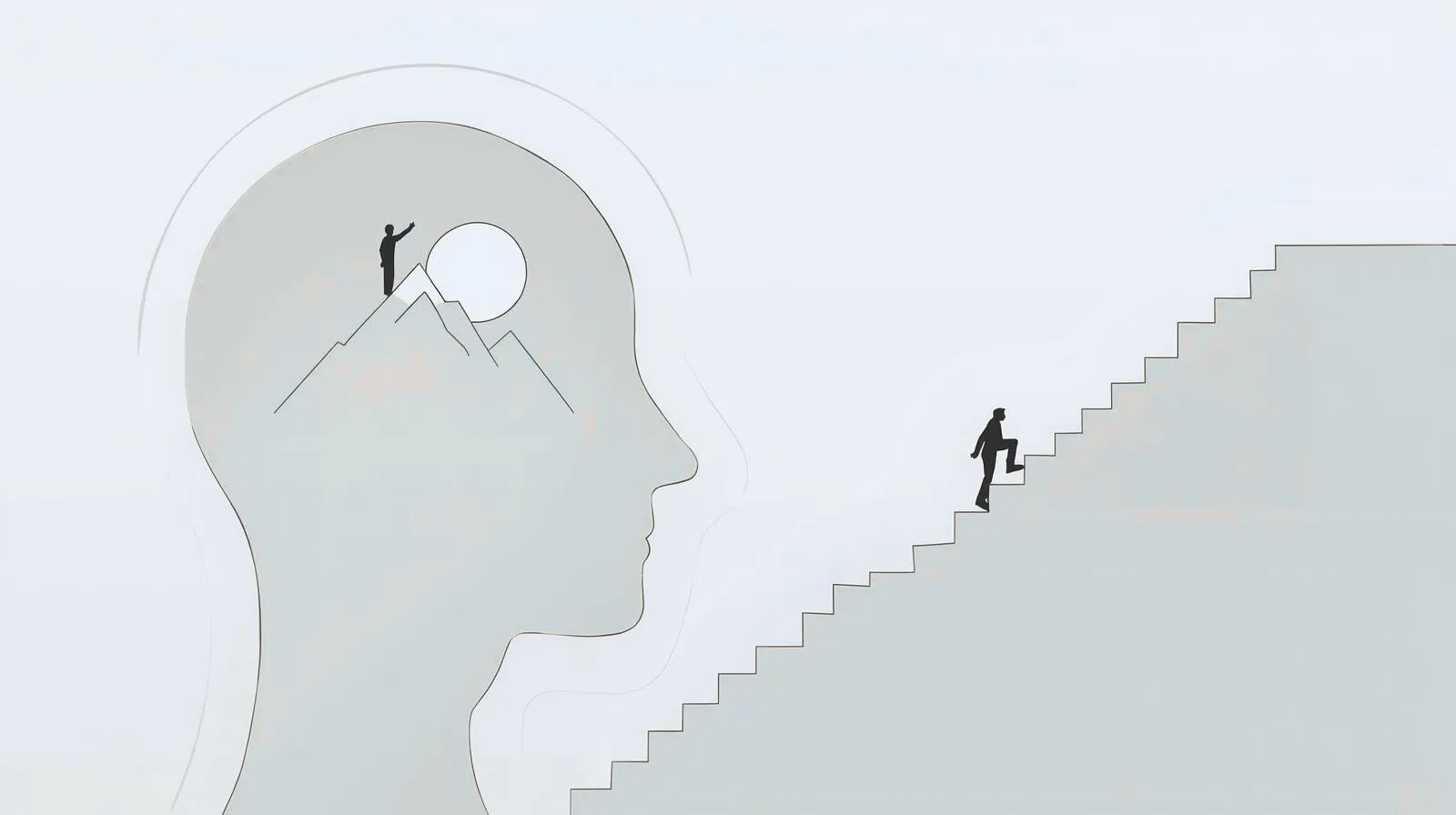
The Gap Between Identity and Behavior
Most of us walk around with two versions of ourselves: the one we tell ourselves and the one we prove through our behavior. This is where the core problem lives: the story you tell yourself versus the actions you actually take.
The internal story is always smoother.
It has better intentions.
It knows what you should do, why you should do it, and exactly how proud you’ll feel once you finally do the thing.
But the story runs ahead.
The behavior stays behind.
And the friction between identity and evidence shows up in small, uncomfortably honest ways.
I see it in myself constantly.
I talk about valuing focus, then let tiny distractions hijack an entire afternoon.
I say I want better health, then treat sleep like it’s optional.
None of it is dramatic.
It’s just the quiet mismatch between who I believe I am and what I repeatedly do.
This is the core of identity vs behavior, the gap we all feel but rarely examine honestly. You can see this same tension play out in the gap between knowing and doing, where knowledge feels complete long before behavior catches up.
Why Feeling Aligned and Being Aligned Aren’t the Same
People take this gap as a personal flaw. It’s not.
It’s the natural tension between intention and consistency, belief and practice.
A lot of this comes down to perception, the story you pass along to yourself without realizing it, something I explored in how our words shape perception.
The story is effortless.
The action is inconvenient.
Action requires preparation, tradeoffs, and an honest look at your patterns, not the idealized version of yourself you like to imagine.
You’ll notice a predictable pattern:
When the story feels good, action feels optional.
When the action becomes consistent, the story becomes unnecessary.
You don’t have to convince yourself you’re disciplined when your actions already prove it.
Identity becomes evidence.
That same idea shows up in unexpected places, even in work, where real behavior creates trust and clarity far more than messaging alone, something I wrote about in Why Human Connection Still Drives Effective Communication.
Narrowing the Gap
Closing the gap doesn’t require a reinvention.
Not a 90-day overhaul or a brand-new persona. Start smaller, try my 21 Day Challenge.
Usually, it starts with two questions:
What version of myself did I assume I was today?
And what did I actually do?
That question is harder to answer than it sounds, especially when just starting feels like its own barrier.
That space in between is the truth.
And this is where the alignment between story and action begins, not by trying to feel aligned, but by doing something small that creates evidence.
Once you see the mismatch clearly, the next step becomes smaller and harder to avoid.
You stop trying to talk yourself into being the person you want to be.
You start taking the action that makes the story real.
Action writes the story.
Not the other way around.
Build Evidence That Matches Your Story
If closing that gap is something you’ve struggled with, you’re not alone. Building alignment comes down to small evidence stacked daily. If you want help starting that process, here’s a simple place to begin.
The 21-Day Discipline Challenge
Get your free 21-Day Discipline Challenge workbook. A simple way to push yourself into consistent actions that build sustainable momentum.