The Classroom Picture: How Bias Begins.
A grammar school teacher stands in front of her class.
“Children, today we are going to see how human emotion shapes perception, and how we see the world around us.”
Three people stand near the edge of a cliff, one reaching toward another who seems to be falling, and a third standing just behind them.
“What do you see happening here?” the teacher asks.
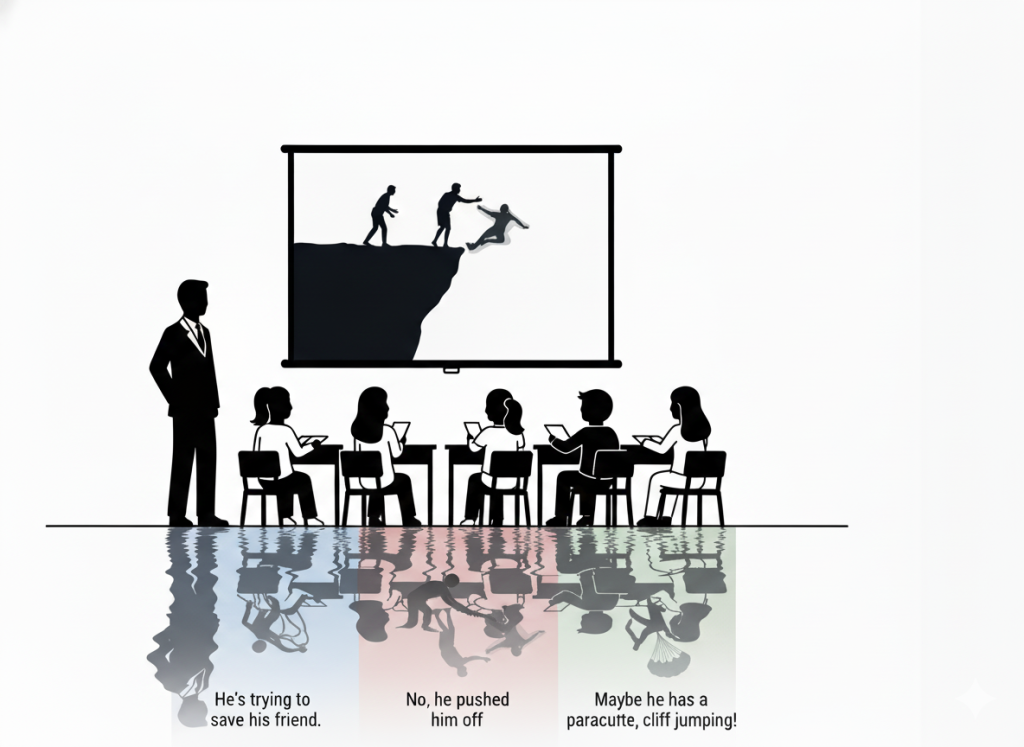
One student says, “He’s trying to save his friend.”
Another says, “No, he pushed him off.”
A third says, “Maybe he has a parachute, cliff jumping!”
They’re all looking at the same picture, yet each one sees a different story.
This illustrates how our past experiences shape our perception of situations.
That difference doesn’t come from the image itself. It comes from the mind, the quiet, automatic system we all rely on to make sense of things.
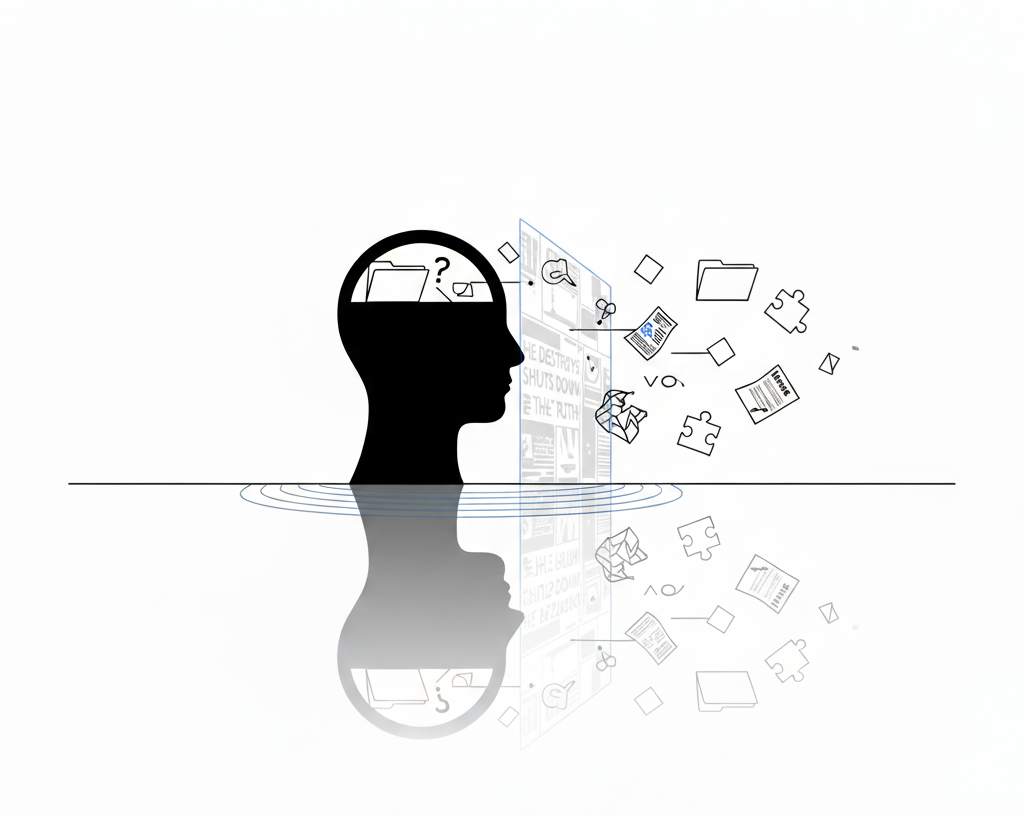
Our brains work like filing cabinets, built over time from memories, experiences, and emotions. Every moment we live gets stored in those folders, ready to be referenced the next time we see something that reminds us of the past.
It’s what helps us recognize patterns, make decisions, and move through life without overthinking every detail.
That system is our bias.
It isn’t dishonest or wrong. It’s how we connect new information to what we already know. The problem isn’t that it exists. It’s that we often forget it’s running in the background.
Our minds fill in missing details with what feels familiar. Sometimes that helps us. Sometimes it misleads us.
The key is to recognize it.
The picture doesn’t change; only the story does.
A Door Left Open: How Quick Judgments Form
You reach a doorway at the same time as someone behind you. You slow down, catch the door, and hold it open.
They step through without a glance. No smile. No nod. Not even that half-second of acknowledgment that says, I see you.
You freeze for a moment, hand still on the handle. Seriously?
A flicker of irritation starts to form.
By the time you let go, it’s already grown. What a jerk.
And that’s how the story begins.
Just like the figures at the edge of the cliff, you can’t see the whole picture, only a frozen moment. But from that still frame, your mind writes the rest. The doorway becomes a stage, and that person becomes a type.
Something about them, how they dressed, how they moved, the look on their face, matches a pattern your mind already knows. It pulls a file from memory, trying to make sense of what it sees.
Suddenly, they’re not just one person. They are people like that.
People who don’t care. People who think they’re better. People who never say thank you.
Five seconds. That’s all it took.
You create a full backstory and intention beyond the observable facts.
But what if… that story isn’t true?
What if:
… they just got bad news,
…were running late, or
…were lost in thought, trying not to cry?
The truth is, we don’t see context in everything we can see and prove.
And that’s the point.
Some people already understand this instinctively. They may not rush to judgment; they will often give the benefit of the doubt, and it’s not weakness or detachment. It’s awareness, the ability to see things as they are, not just how they make us feel. Without context, emotion fills the gaps, and what feels true starts to replace what is.
It’s the reason we’ve heard the same advice for generations:
“Don’t judge a book by its cover.”
Think, Before You Think: How Emotion Shapes What We Believe.
The same thing happens online, only faster.
Spend five minutes scrolling through your feed, and you’ll see digital versions of that door moment.
Posts, videos, and headlines written to trigger frustration, pride, or outrage. And a lot of times it’s intentional, designed to make you feel something before you think about it.
You’ve seen them:
“He DESTROYS his opponent in debate.”
“She SHUTS DOWN the critics.”
“The TRUTH they don’t want you to know.”
Before you even click, you’ve already chosen a side.
And when what you read agrees with what you already believe, it feels good.
That’s confirmation bias, the warm, satisfying certainty that tells us we’re right. It is also why the gap between what we know and what we actually do can stay wide for years
It’s the same process that happened in the classroom and at the door.
Emotion first, interpretation second.
The facts don’t move; only how we perceive them does.
The moment you notice this pattern, the second you pause before reacting, that’s the beginning of emotional intelligence.
It’s the space where perspective returns to neutral. It can hold us accountable, give clarity, understanding, and may even prevent irrational reactions, emotions, and behavior.
The Space Between Feeling and Knowing: Turning Emotion into Awareness.
We’re all human. Emotion is the pulse that drives us.
Without it, there would be no love, no ambition, no art or progress.
It’s what makes someone choose to heal others, run for office, build a business, or fight for change.
Emotion is the spark behind everything great we’ve ever created.
You may find, through awareness and emotional intelligence, that your intuition is still justified.
OR
It may be that you overreacted, drawing a conclusion based on a bias.
That’s where awareness matters.
It’s not about silencing emotion. It’s about seeing when it’s leading the way.
When we pause long enough to ask whether our feelings are justified or reactive, we start making decisions from clarity instead of impulse.
We can’t change who we are or erase what we’ve lived.
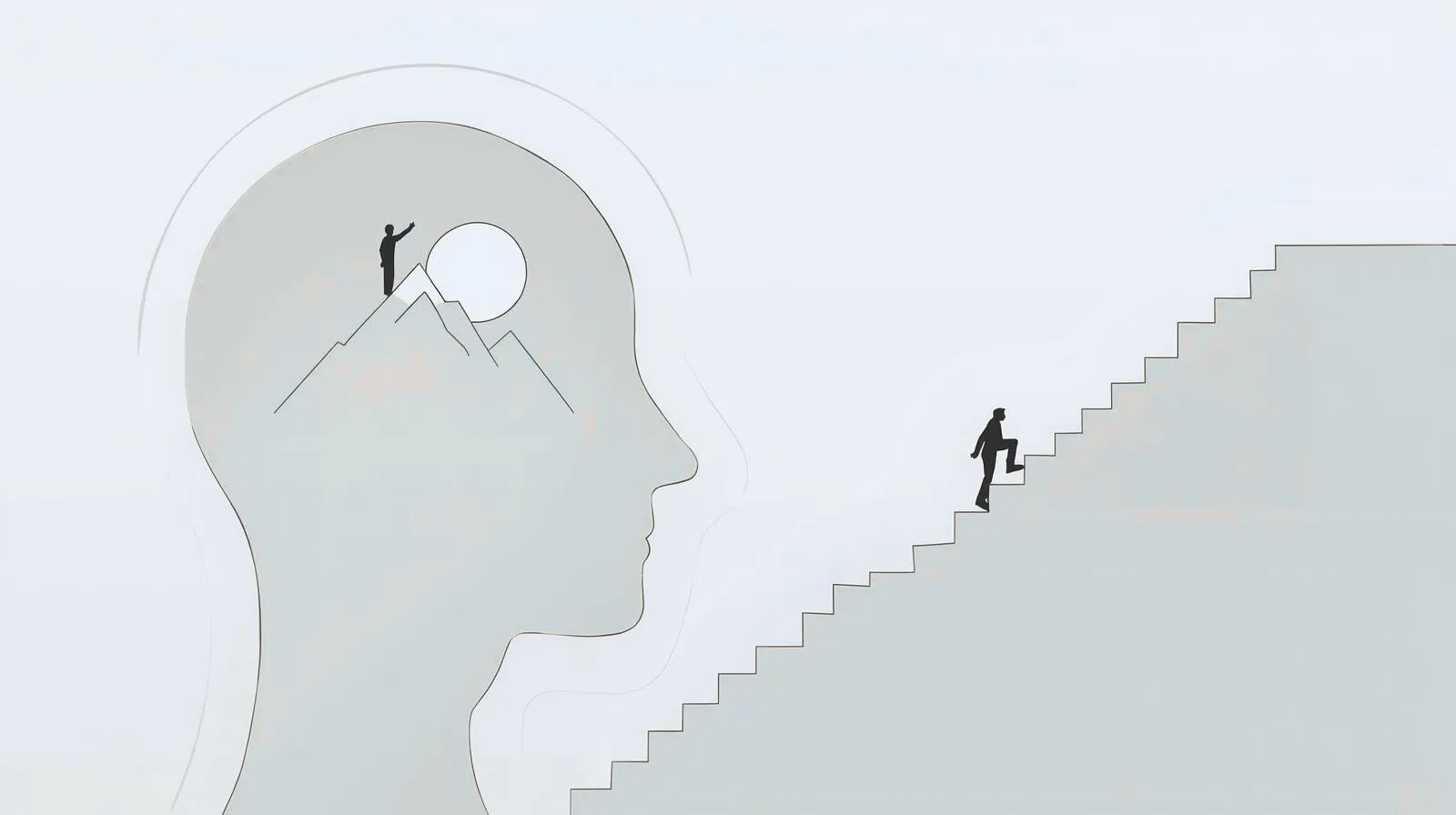
Every thought, every choice, every bias is shaped by where we’ve been and what we’ve felt. That’s reality.
But awareness gives us a choice in how that reality guides us.
When we recognize the difference between perception and reality, we stop being ruled by what once shaped us and start shaping what comes next.
That’s where personal growth begins, not by denying emotion but by understanding it.
Because once you see your feelings for what they are, signals rather than indicators, you begin to fill those emotional gaps with objectivity, curiosity, and honesty.
Because when we understand the difference between what is and what feels, we don’t lose emotion, we refine it.
And when we refine it, the words we pass along carry something more than just emotion.
They carry wisdom.
Next
If this made you more aware of how words quietly shape perception, this follow-up looks at how those internal stories show up in what we say, believe, and act on.