From Products to People: The Intended Purpose of SEO Is Human
When I first started in sales, I believed success came from knowing every detail about the products. Features, specs, comparison charts. During the mobile tech boom, that was enough to hit my goals. But eventually the excitement faded, and so did my results. What changed was simple. I had been focused on things, not people.
That same lesson applies directly to SEO for small businesses. Keywords, rankings, and algorithms matter, but they are not the whole picture. Behind every search is a person with a problem, a question, or a moment of frustration. Once I shifted my focus from the product to the person, everything in my work made more sense. The same shift changes how you approach SEO.
Human connection is the part that most small businesses overlook. They focus on the mechanics of digital marketing and forget the person typing the search in the first place. The moment you bring that person into the center of your strategy, your content becomes clearer, your SEO becomes stronger, and your marketing starts to feel like a real conversation again.
This is where human-centric SEO begins. What it actually means in practice is worth understanding before you build anything around it.
SEO for Small Business: Basics vs. Human Connection
Once you understand that the intended purpose of SEO is to help a real person find clarity, the rest of the strategy becomes easier to see. Most people hear “digital marketing strategy” and immediately think of SEO, PPC, rankings, and analytics. Those metrics matter. They show whether your work is moving in the right direction. They form the technical foundation.
But when those metrics become the entire focus, the human side disappears.
Behind every search, every click, and every impression is a person trying to solve something. That is why effective SEO for small businesses is not about chasing algorithms. It is about staying connected to the human being behind the screen. When you keep that in focus, your content feels clearer, your strategy feels grounded, and your marketing starts to work the way it was intended.
A Simple Example: The Store Experience
Think about walking into a store where the salesperson never looks up. They might be busy, but in that moment, it feels like you do not matter. That first impression shapes how you see the entire experience.
Now, picture the opposite. The salesperson is still busy, but they look up, acknowledge you, and say they will be right with you. Nothing big. Just a small signal that you have been seen. That one moment changes how you feel.
I have been both of those salespeople. What I learned is that simple recognition creates trust. It shows the person in front of you that you understand they are there for a reason.
The same idea applies online. When someone lands on your site, they are not looking for a perfect headline or a stack of keywords. They want to feel understood. They want to know they are in the right place. That moment of recognition is the digital version of looking up and saying, “I see you, and I can help.”
That is the heart of human-centric SEO. You meet people where they are, and you make them feel seen before you try to solve anything.
Human-Centric SEO for Small Business
Small business owners often ask, “How do I rank higher on Google?” A better question is, “How do I connect with the person searching?”
That is the essence of human-centric SEO. Some people call it customer-centric SEO, and that’s true, but the word “customer” is too narrow. At its core, this work is about people. Human-centric SEO widens the lens to remind us that connection matters more than the algorithm.
- Keyword research shows what people are asking.
- Content gives you a chance to answer in plain English.
- Technical SEO makes sure they can actually find you.
At the heart of it all is empathy. Human-centric SEO means showing that you understand what your audience needs, not just what Google’s crawler is scanning for.
Handle the technical side so you can stay focused on people.
Rank Math manages meta, schema, and on-page SEO signals directly in the WordPress editor. The mechanics stay clean so your content can stay human.
My affiliate link. I use Rank Math on OGV.
If you are weighing whether the free version is enough, I break down exactly where Rank Math Free ends and Pro begins in my full Rank Math review.
Where AI Fits Into the Conversation
AI is everywhere in tech, and the hype goes both ways. Some people fear it, others overuse it. The truth is that it is a powerful tool when used correctly, and it should be embraced, not feared.
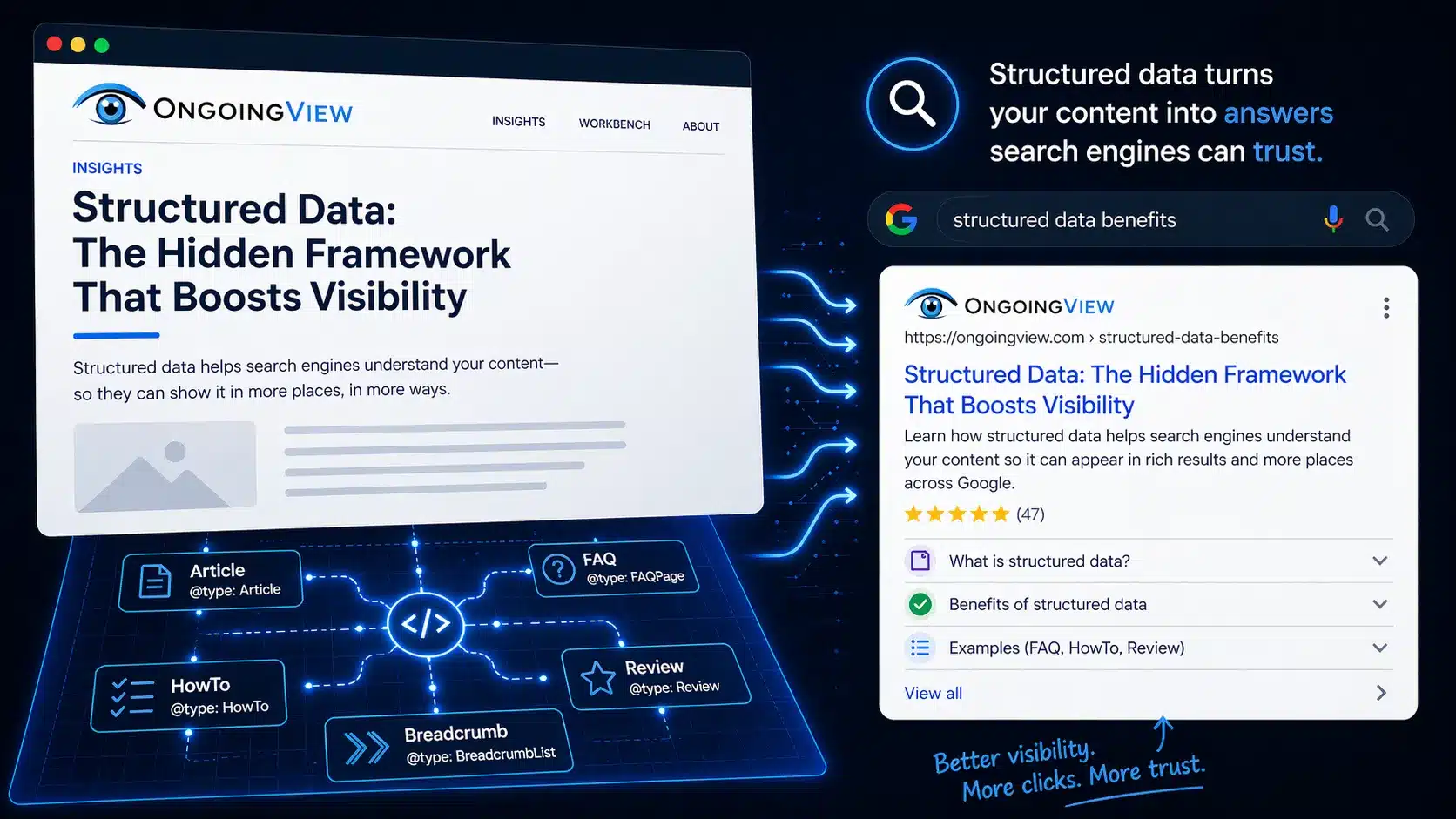
Just like SEO, AI is only valuable if it helps connect with real people. Additionally, it’s only as valuable as the information it’s given. The same holds for search engines: the cleaner the information you hand them, the less they have to guess about who you are and what you do, which is exactly what structured data is for.
For me, AI feels like a collaborator. I don’t obsess over prompts. I just talk to it in plain English, the same way I would explain an idea to a coworker. That makes it useful for getting thoughts out of my head and into something I can work with.
Here is how I use it:
- Strategy check: If I am building a campaign, I may run my notes through AI to see if I missed something. Sometimes I use Notion AI to organize a database so I can quickly scroll or search. It takes time to set up, but once built, it helps me spot gaps.
- Content review: After writing a draft, I may run it through AI for grammar or structure. I also ask it to show me how competitors are talking about the same topic, which highlights gaps I can fill.
But AI stops there. It does not understand nuance. It cannot empathize with a customer walking in stressed because something broke, or with a business owner trying to juggle work and family.
What it gives me is efficiency, organization, and a second set of eyes. What it cannot give me is the human connection that makes content resonate. That is why if you stay people-focused, your work will always stand out from the flood of generic AI content.
Taking It Beyond the Store: Going Where People Are
In sales, when customers were not walking through the door, we had to go find them. We set up tables in malls, attended local events, and built partnerships with nearby businesses. It was about meeting people where they were.
Online, it works the same way:
- Instead of waiting for walk-ins, you show up on social media.
- Instead of networking with the store next door, you connect with community groups.
- Just like handing out flyers at an event, you post about local news and updates that matter to your audience.
Whether offline or online, the principle is the same. Go where your people are and show up with empathy.
Why Being Human Still Wins
SEO can feel overwhelming, especially now with AI tools flooding the space. But just like in sales, growth does not come from shortcuts. It comes from empathy, consistency, and connection.
At the end of the day, digital marketing comes down to this: connecting humans to humans. Us, our products, our services, our stories. Them, the consumers, the end users, the people on the other side of the screen.
From algorithms to people, that is still what makes businesses thrive.
Key Takeaways
- SEO is about people first. Search engines matter, but connection drives results.
- Empathy is a business advantage. Listening, noticing, and responding builds trust.
- AI is a tool, not a replacement. Use it to speed up strategy and organization, not to replace human understanding.
- Go where your audience is. Whether that’s social media, community groups, or local events, show up where people spend their time.
- Consistency wins. Growth comes from small, steady actions that put people before algorithms.
Frequently Asked Questions
What is human-centric SEO?
Human-centric SEO focuses on the people behind the search. It blends keyword strategy, technical SEO, and content with empathy, making sure your site answers real questions in a way that feels authentic and relatable.
How is this different from customer-centric SEO?
Customer-centric SEO focuses on the buyer, while human-centric SEO widens the lens to all people engaging with your content. A customer is one type of person, but your audience also includes community members, partners, and future buyers. Human-centric SEO keeps the focus broad while still being personal.
Can small businesses compete with big companies in SEO?
Yes. Large companies may have bigger budgets, but small businesses have an edge in personal connection. Local relevance, authentic stories, and community involvement give small businesses a unique advantage
How should small businesses use AI in marketing?
AI can help with research, organization, and editing. Use it to speed up tasks, but always apply your own voice and understanding. Customers want authenticity, not generic content.
What’s the first step I should take if I’m new to SEO?
5. What’s the first step I should take if I’m new to SEO? Start simple:
Create content that answers customer questions in plain language.
Research the keywords your customers actually search.
Make sure your website loads fast and works on mobile.